Choosing an external wall system for a comfortable, efficient 7-star home.
For many Queensland homeowners, a traditional brick home still represents strength, durability and a timeless look. Brick remains an excellent external-wall option: it is robust, fire-resistant, low maintenance and familiar to buyers. It can also contribute useful thermal mass, helping to moderate indoor temperatures when the home is well designed for its orientation and climate.
However, under Queensland’s current 7-star energy-efficiency requirements, the external wall system is no longer simply a facade choice. The overall home must perform as a complete thermal envelope, with the design, orientation, insulation, glazing, shading, roof and ventilation all working together.
How the wall systems compare
| Traditional brick | Durable, low maintenance and timeless. Brick can provide useful thermal mass, but still needs good insulation, glazing and shading to limit unwanted heat gain and heat loss. |
| Hebel | A lightweight autoclaved aerated concrete system that provides a solid rendered appearance, thermal mass, acoustic performance and fire resistance. It requires suitable detailing, coatings and fixing methods. |
| Lightweight cladding | Supports high-performing wall build-ups with insulation and wall wraps. It is fast to install, flexible in design and well suited to upper floors, projections and mixed-material facades. |
A traditional brick veneer home can absolutely achieve a 7-star outcome, but it may require careful attention to insulation levels, wall cavities, glazing and shading. Brick’s thermal mass can be valuable, particularly where it is protected from direct summer sun and combined with good insulation. On its own, though, thermal mass is not insulation; the wall system still needs to limit unwanted heat gain and heat loss.
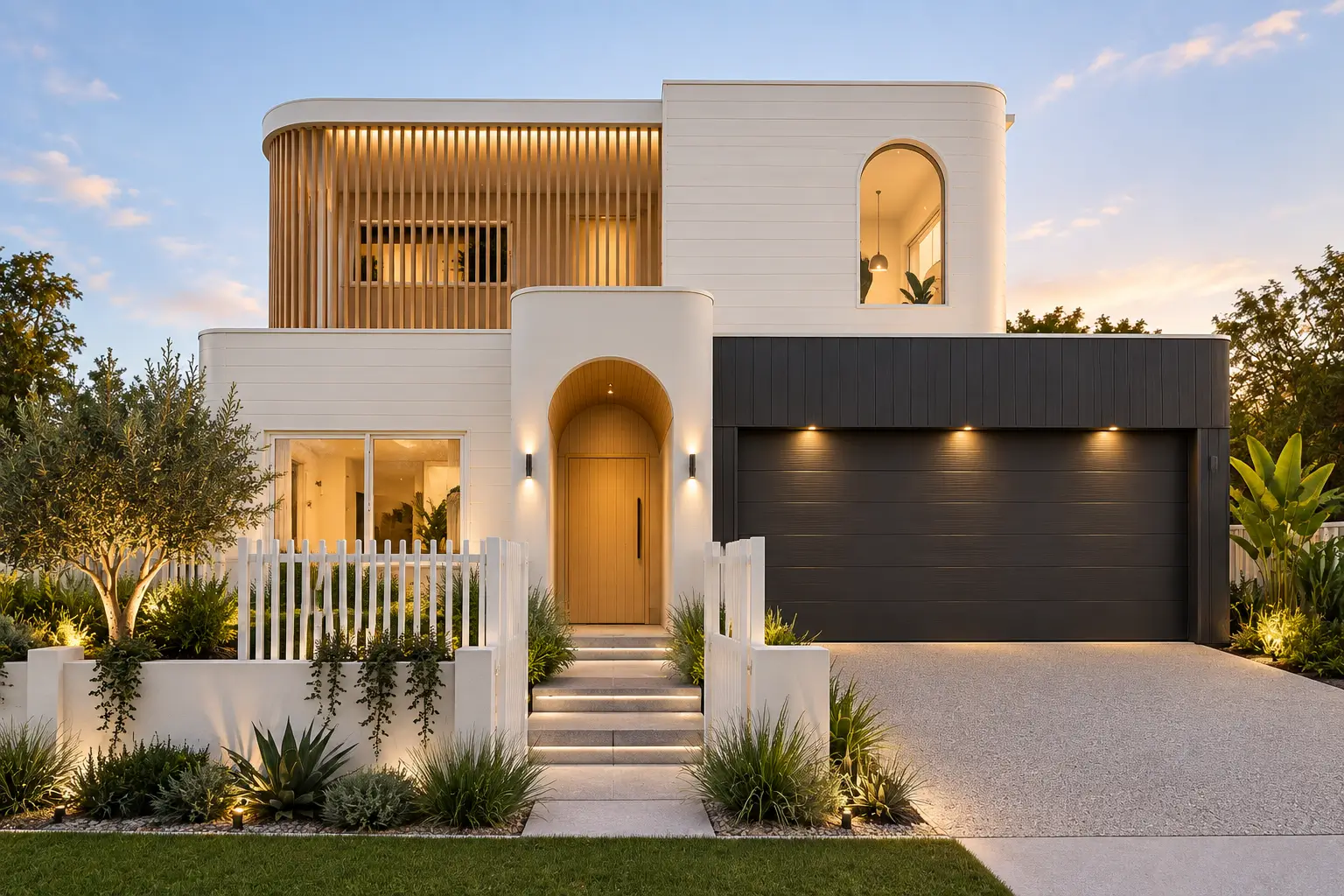
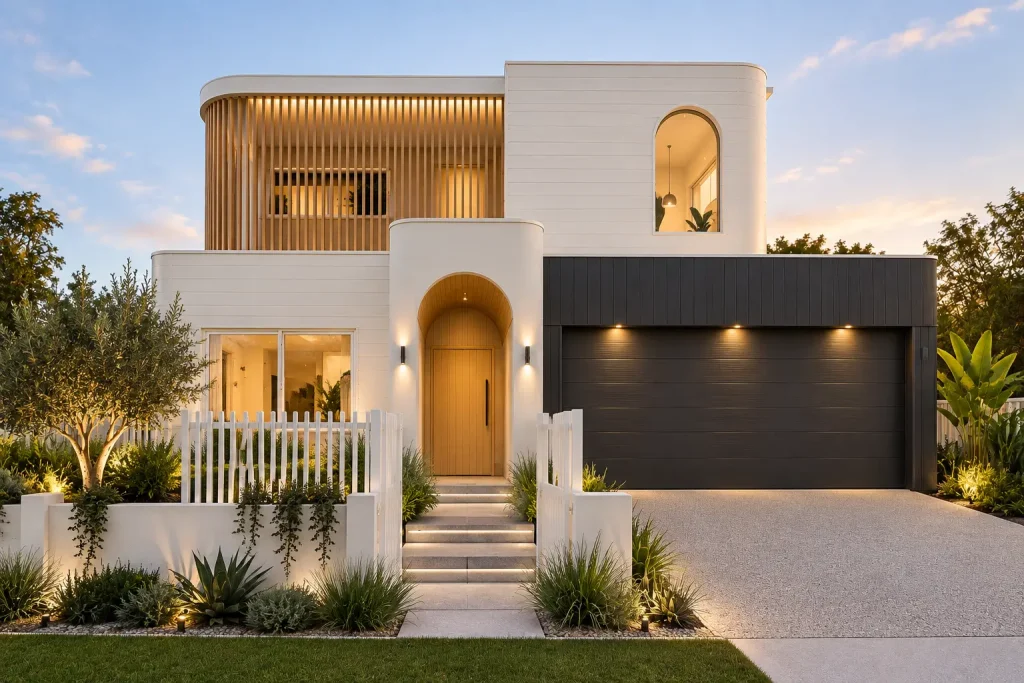
This is where newer lightweight wall systems are gaining momentum. Options such as fibre-cement cladding, insulated composite systems and Hebel panels can be designed with high-performing insulation and reflective wall wraps to create a very effective thermal envelope. They are also quicker to install, lighter on the structure and can offer greater flexibility for contemporary designs, upper-storey construction and sites where reducing structural load is beneficial.
Why lightweight materials are leading the way?
Lightweight cladding systems are particularly appealing in modern home design. They can reduce construction time, allow a wider range of finishes and colours, and make it easier to integrate insulation as part of the wall build-up. They also suit architectural features such as facade projections, upper floors, skillion roofs and mixed-material elevations. Maintenance requirements depend on the selected product, but many modern cladding systems are designed for long service life with straightforward repainting or renewal over time.
The key point is that no single wall material automatically delivers a 7-star home. A high-performing result comes from selecting the right wall system for the site, climate, budget and design, then coordinating it with the rest of the building fabric from the beginning.
Traditional brick remains a sound and durable choice. But as energy-efficiencystandards rise, lightweight materials are leading the way in design flexibility, construction efficiency and the ability to build high-performing wall systems.
Share this Blog:


